Showing posts with label professional development. Show all posts

Tuesday, May 13, 2014

The Whole Teacher Approach

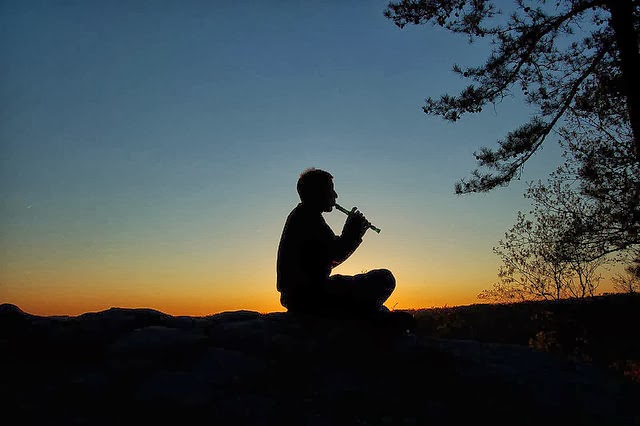
Photo by Ben Andreas Harding

What do teachers really need? This is a hotly contested subject. Do we need more autonomy? Better PD? Higher salaries? More praise?

In short: Yes.

Of course it is much more complex than that. Recently, I have had the pleasure of trying to dissect this topic with one of my teaching and thought partners, Amber Johnson. Our multiple platform and somewhat ongoing conversation has wrapped around to a different way of reaching teachers. It isn't revolutionary. It is actually exactly what we believe is best for the kids we teach, just applied to teachers.

What if we focus on the whole teacher? How might our schools be different if we focused on personal passion, healthy lifestyle, and intellectual growth as much as the "professional development" we assign to teachers? This goes beyond listening to teachers and hearing what they need. This is the next step of helping to develop our teachers into more complete, happier, deeply fulfilled human beings. This is a level of care and love that I don't often hear explored in faculty meetings and staff development sessions.

Let's try this on for size...

The Whole Child Tenants (altered to apply to teachers):
  • Each teacher enters school healthy and learns about and practices a healthy lifestyle.
  • Each teacher learns in an environment that is physically and emotionally safe for students and adults.
  • Each teacher is actively engaged in learning and is connected to the school and broader community.
  • Each teacher has access to personalized learning and is supported by qualified, caring adults.
  • Each teacher is challenged academically and prepared for success in further study and participation in a global environment.

Teachers are stretched. We are stressed. We are doing incredible things with kids and sacrificing so much of our personal selves to make these gains, to increase the opportunities of our future generations. I think Bill Ferriter put it best when he wrote Teaching is a Grind.  

What happens when we tap into who teachers are and provide them chances to grow in their hearts and souls, not just in practice and skills? How would this alter our stamina, our drive, our overall health and well being?

I don't know exactly what this looks like in everyday practice, and I am not sure how we make this happen. Luckily, I work with people I really care about and I can't imagine not providing moments for us to explore growth on every level. I begin thinking about how I can dedicate at least a few minutes each meeting, each gathering, each opportunity, formal and informal, to grow together with this group in a different way. Or at least provide space to see what happens when you make personal happiness and heart-strength a priority equal to that of professional practice.

I can't think of any good reason not to at least try.

Sunday, May 4, 2014

Professional vs. Personal Development

learning to grow.
Photo by Casey Muir-Taylor
Over the last few years we have seen a huge shift in how we develop our teachers. It is no surprise that districts and organizations are beginning to move away from systemic, mass-produced professional development, as the one-size fits all model is neither particularly engaging or effective. With this has come a transformation of PD, with Edcamps and PLCs moving in to take the place of how we traditionally thought about growing teachers.

If you ask teachers, you will probably find that the majority of them are extremely grateful for this change. Teachers need autonomy in how they grow, explore passions, and we also need to build a network of allies that are invested in growing in the same direction as us.

It is becoming more and more apparent to me, as I finish my sixth year of teaching, that being a connected education and having this network of people stretches far beyond my professional growth. This network of people have become far more than colleagues, but true friends that are invested in caring about me as a whole person, not just the piece of me that is an educator. They are people that I connect with over social media, explore educational philosophy and pedagogical struggles with, but it doesn't stop there. I watch them post pictures of their children, celebrate birthdays, and send words of encouragement when hardship and sadness falls. I get messages of encouragement when I am moving into new territory, we share a funny video or new song, and I send a quick note when I haven't heard from someone in a while.

This is a network of people growing the whole educator, caring about the hearts of people.

Last week, I was lucky enough to explore this very topic with a group of educators at Common Ground, the Maryland Society of Technology in Education conference. Andrew Sharos, from Leyden High School in Chicago, was my partner in leading in that session. Andrew and I have worked to connect our classes in various ways this school year and have explored ways to grow as educators. It has been one of the most rewarding and fruitful relationships I have ever had professionally. What I didn't talk about during our presentation were a few of the moments that were more important to me as a person, those points in life when your heart gets a little bigger and your soul a little stronger.

Like getting see Andrew's son for the time.


Or getting to share how our kids at Patterson Park Public Charter School have #leydenpride.


These moments are possible because of being a connected educator, but more than that these experiences have been nurtured by a group of people that encourage educators to take professional development personally. They have become my family in learning and growing and living. 

As we push administrators, districts, and our colleagues to rethink how we grow educators, I will push them to grow the hearts of those around us. When you start with the heart, we all find ways to grow in the direction of love. And when we center that movement in nurturing a community of people that care, it doesn't matter what standards you are nailed to, what curriculum you teach, or what your kids look like, because what you have to give those kids transcends everything external and moves to building internally. These communities allow exceptional personal growth, and that benefits everyone professionally. 

Saturday, October 26, 2013

A Week at Warped Speed

(Photo by Richard Shaw)
The last week has swept me up and carried me along at warped speed. It was full of travel, conversations, connections, some disappointments, and lots of smiles. It only seems appropriate to now take some time for reflection.

Last Friday, I left Maryland before sunrise to travel to the Science Leadership Academy in Philadelphia. My colleagues and I were welcomes openingly into their school to observe the unique learning environment and practices students and teacher engage in daily. SLA is amazing example of student-driven, Project-Based Learning. We spent the day visiting classrooms, talking with students and teachers, and engaging in the very natural learning that takes place here.

Sitting down with Chris Lehmann was one of the highlights of this trip. If you have never spent time in Chris' openoffice, it is hard to explain the experience fully. Chris addresses every single student that passes his office (the doors are open on both sides to allow full access for everyone). He says hello, compliments, and encourages everyone. His love for people was felt when we talked with students and teachers alike. To quote one, "Working for Chris is the best thing that could ever happen to anyone." It takes an amazing leader to make individuals feels so special, yet at the same time build such a strong, collaborative community.


After our visit, my colleague and I continued up the coast to New Jersey. Here, we attended #Edscape, hosted by Eric Sheninger and New Milford High School. Not only did we attend amazing sessions, we had the privilege of hearing George Couros speak as the keynote. On top of that, I met up with a many people I had connected with previously and made some new friends. The learning, the connections, the heart and soul of the event, it was all so much more than I expected. I left for home feeling so incredibly grateful for the learning and conversations I was able to have with some of the most visionary people in education. 


I traveled back to Maryland and the week carried me along, but I was brought back to conversation that I had with George over the summer at ISTE. He asked me what I would change after listening to a speaker. I am often brought back to this question when reflecting upon experiences. I have engaged with some of the most important, forward-thinking visionaries in education. What have I learned? What did I take away? What will change?

The change for me, this time, is not to make any big changes. As I visited SLA and talked to so many different educators, I realized I am on the right track. I saw so many of own practices and my students' habits in the students and classrooms at SLA. I offered my own connected educator experience and shared the story of our school at Edscape. I showed others how we design our own curriculum, offer our students amazingly relevant learning experiences, and bragged all about our kids and teachers. 

I realized, for the first time, that it is time to just give these new practices a chance to become natural. I was encouraged and supported. The change for me is to not add anything new. The change becomes perfecting the craft of implementing everything that is currently new. My change, will be to not change everything, but to sit comfortably in the new that already exists, looking to how we can now improve and get better in this current space.

In an age when change and evolution of culture is happening so quickly, when do we stop and narrow our focus? How do we balance change and relevance with the chance to practice and do something well? As teachers, is there a space where both these thing exist? In trying to navigate this slippery slope, we must always ask what is best for our students, reflect upon the decisions and progress we have made, and always keep our eye on our goals.

As I reflect on these experiences, I will be mindful of what is happening now with my teaching and my students. We will change and grow as the world around us evolves, but we do this with purpose, never comprising the practices we have made current commitments to. 

We will be thoughtful in what we currently practice, ensuring that we are not locking into everything new, passing idea. We will focus on the important learning and growth taking place currently, always being open to the change that is best for us. When the time is right we will embrace that change. Right now, we sit mindful in our current learning space.

Wednesday, October 23, 2013

The Power of Autonomy

(Photo by John Hendrixson)

Releasing control can be hardest thing in the world. As a teacher, I want to plan, prep, prepare, and ensure that everything is perfectly in place to make certain my classes run smoothly and my students are successful.  Calm, productive, engaged, that is what we all want for our students, right?

In the past few years, I have embraced a different approach to teaching. It can still be calm, we are productive, and students are engaged in learning.  Although, most of the time, it is a little messy.  We make noise and we make a mess. We talk, think, chart ideas, argue, debate, draft, dispose, and create. My students are able to explore the process of learning and discovery, mostly without my help. I am available to provide guidance and direction, but mostly I just support them, encouraging them to feel confident enough to push their thinking and challenge one another to be better.

This happens with autonomy, allowing students to explore without tight restrictions. With autonomy and control over their learning process, students are empowered to learn like real people, in the real world, learning about real things that matter. This is where passion is born.

This past week, I learned how powerful this notion of autonomy is for adults, not just my students. We brought this approach to our professional development with our first FedEx Day. Teachers and staff could work on a project completely of their own choosing, the only two rules being it had to benefit students and they had to deliver something at the end of the day.

I have never seen our staff so excited during a professional development. They loved having autonomy, were empowered by making their own choices and managing their own time, and inspired by what others were doing. We collaborated and created.  Then we shared. What more could you hope for from a smart and dedicated teaching staff?

(FedEx Day comments from staff, board members, and parents)

Like my students, our staff exceeded my expectations. They took full advantage of this time to work on new projects, develop and build new things, and design opportunities for our students. No one told them what to create, which allowed teachers to focus on something they were invested in and passionate. Most worked on something that had been rattling around in their brain for a while and just never had time or space to make a reality.

In reflecting upon this experience, and the joys and struggles of providing autonomy to my students, I have realized that it takes a level of courage to say, "I trust that your ideas are better suited for you than my plan for you. I trust you to take charge. I trust you to be great." I think this is why people love to engage in self-directed learning. They are suddenly valued, their ideas and plans trusted, their products validated. 

   
So what did I learn? Our schools must provide teachers the time and space to collaborate and inspire one another. If you do not have a staff that is able to be explode when giving autonomy, you need to reevaluate your hiring process and the people you are trusting with our kids. I learned that when given the chance to inspire one another to be great, our staff will work their butts off to ensure everyone is successful, supported, and encouraged in their own creative process.

I learned there is a paradox at work here. When given autonomy, we build community.

What are you expecting from your students and staff? Are you giving them the space to be amazing? Or do you control and direct their creativity and productivity, only to find the results are lackluster? Even bigger, are you brave enough to relinquish your own expectations and allow the people around you to release their talents? How are you empowering the people around you, students and adults alike, to inspire one another without restrictions?

In a world that is unpredictable and ever-changing, we grasp to shreds of our lives that can be molded and controlled. It is human nature and it makes us feel safe. In a world that is unpredictable, though, we must walk the road together, being willing to push one another to grow and change. Let's take a moment to explore what is unscripted and beautiful about our ideas. Let's get messy. Let's have the courage to trust the greatness in each one us. Let's create something wonderful together!

Sunday, September 29, 2013

Developing the Professional #SAVMP


I was probably in my third year of teaching before I experienced any formal professional development that was both meaningful and relevant. Every year I sat through numerous sessions that involved someone at the district level reading a PowerPoint to a group of teachers, usually in a cramped and ridiculously uncomfortable classroom.  I remember early in my career sitting on a radiator (there were no seats left in the room) in a classroom that was 100 degrees, watching cockroaches run in and out of the slats upon which I was sitting.

Needless to say, I didn't gain much from these sessions. I realized quickly that if I wanted to develop as a teacher I would have to make connections and find outside resources. I had a tight group of English teachers in my first-year cohort and we shared ideas and lessons regularly. I also began to "steal" from teachers that shared their lessons online and had class websites. It was like hitting gold when I could get a glimpse into someone else's classroom.

It wasn't until my fourth year of teaching that I began working at a school that tapped into the talents of its own staff. My current school, Patterson Park Public Charter School, ran almost 100% of our PD's in-house, meaning staff got choices and were empowered to facilitate sessions they felt would be meaningful. We also dedicate one afternoon each week to PD. Students leave early on this day and the staff engage in a wide range of development experiences.

In helping my school think through what professional development could be, and working over the summer with An Estuary, a professional development startup based in Baltimore, I have grown to believe that teachers should be in charge of developing themselves as professionals. In the words of Shelly Blake-Plock, "Teachers should control their development because teachers actually matter." Shelly and his team really started to change my views on what PD could be if we just connected teachers and enabled them to take charge of their own learning in meaningful ways.

The greatest form of development I have found as a professional has been through the connections I have made with other teachers and administrators. Through Twitter, I have been fortunate enough to be exposed to so many different ideas and people, all of which have shaped my own teaching practices. I have learned more from being connected to these people than I have from any class or PD session I have attended. I am exposed to articles, studies, videos, chats, and blogs that serve as the most powerful form of personal and professional development. 

These experiences, and my Professional Learning Network, has changed my teaching, and my overall attitude towards the profession, in powerful ways. Building these relationships allows me to share what I am doing with people that care about me and my students. They cheer us on, help us when we fall, and push our thinking so we can be better tomorrow. 

Recently, I also started playing around with an app called Sanderling. This is an amazing tool for someone like me, a teacher that is constantly doing development activities outside of my school and classroom. I tweet about this stuff, talk to staff, and blog about it, but I have never actually tracked my progress. This tool enables me to create projects and log my activities in a field journal. I can connect with others that are interested in working on the same projects, create lists, and reflect on activities I engage in along the way.

We all benefit, we all learn, and we all grow.

What this really comes down to is the power we all have to develop each other. Our voices are important. Our experiences offer change and hope. Our failures guide us into success when we share with others. Teaching can be lonely and isolating. Sharing opens our doors and breaks down the walls. What we do each day is important and we need to show the world. Teaching together yields better results than teaching alone. On a personal note, it has also helped me build some of the most amazing friendships with people that truly care about me and my students, and that I deeply care about in return. 

Does it get much better than that?

Whose voices do you listen to when crafting development experiences? Are you giving teachers and staff what they need, or are you forcing square pegs into round holes? When designing PD for teachers, are you tapping into the talents of your staff, thus empowering them to share something special about their own work with others? Do you treat your staff as professionals that are smart and talented enough to have autonomy and develop their own professional needs?

When thinking about developing the professionals around you, listen to what they need, both individually and collectively. Empower your staff to share with one another and the world outside of their classrooms. Encourage them to disseminate their own talents and knowledge, as it will lift them up and help them grow.

Wednesday, August 14, 2013

Hope and Heartbreak: Building a Tribes Community


(Photo used by permission: Broken Whisker Photography)

Training Reflection: Day 2


In continuing our training to build a better culture and community within our school, we completed day two of training with Tribes.  We were put into tribes, or small groups, with a few of our colleagues and Nancy, our facilitator, told us it was time to deep deeper.  Things were about to get personal.

First she asked us to pull out our phones and choose a picture to share with our tribes.  This was fun and I learned something new about each of my colleagues.  I got teary-eyed sharing my image during the first image, but I pulled it together, and we moved.  No problem...

Next, we were given a piece of wire and asked to manipulate it in a way that would represent the course of our lives.  This "Live Wire" activity seemed harmless enough.  Nancy put on some music and everyone worked intently to twist, bend, and twirl their wire into their own story. Then we shared our stories with our tribe groups.  

That is when things got uncomfortable for me. Today was the first time I was brought to tears in front of my coworkers.  Today I was open and vulnerable enough to be moved deeply by stories of personal pain and struggle. I felt silly, dramatic, a little out of control of my emotions.  I didn't like it and fought to stop it.

But while one of my co-workers told his story, through a beautifully designed wire, he shared about heartbreak and hope. He was so honest and brave and trusting. What I respected most was he took advantage of what Nancy has been calling the "right to pass." He simply stated that of the three most tumultuous events represented on his wire, he would share only one with us. He showed how it was simultaneously safe for our group to trust each other with these histories and to not share everything.  

Live Wire: Personal Histories

The training touched on many other aspects of building a community, including 21st century skills, multiple intelligences, and building reflective practices. While all of this was important for our understanding of this program, I will be taking away our experience in our own tribes, the influence this had on my overall well-being as a part of this team, and how I can reflect on my emotions to this experience.

Tribes, unlike many of other character programs, focuses on building and changing the culture within a school. It is not about a specific lesson or skill, but about a community. Together, we want our students, parents, and teachers to feel as if they work in the most amazing community, one that will support them through anything they may encounter.  

The focus is to build a community that is strong in times of both hope and heartbreak.

Yesterday I trusted the process.  Today I trusted my community.  Tomorrow, I remain open-minded and willing to learn, for I have the greatest trust that together we can only continue to grow in this experience. 

Wednesday, July 31, 2013

Innovative Practices: Changing Minds vs. Creating Cultures


Photo by Richard Shaw
This has been an excellent month for learning.  As usual, with great learning experiences come deeper questions and challenges.  I was lucky enough to work with An Estuary's Summer Institute, which included a group of teachers from all over the country.  This was a talented group of teachers that are dedicated to developing themselves, their staff,  and the teaching profession.

One of the questions that kept arising in our session was how to get other teachers and staff members to "buy into" new and innovative teaching practices.  It can be a scary place for teachers when they feel like they are all alone in their school, trying new practices, and being the odd man out.

My experience has shown me that it is more powerful to create a culture of innovation rather than changing people's practices.  What I mean is that when you are in an environment where teachers are not expected to be innovative, it usually doesn't work to tell them they need to change.  No one likes to hear this, especially if they feel successful in their current practice.  

So why not create something new, a culture that doesn't already exist, and then invite others to participate?  How can you harness the power of connections and relationships to create real change? Here are a few suggestions.

1. Make Suggestions Solution Oriented 

Even though you have some new tool or idea that you think is great, trying to get all the teachers on your floor to adapt it without reason might be a hard sell.  I never suggest anything to our teachers unless it offers a solution to a problem they are having.  I listen to what teachers want, then I help them find the tool that works for that task.  The conversation usually looks like this: You wish you could get quick quiz results?  Oh, have you tried these apps? No? They are awesome-want me to show you how I used them?

When teachers are able to see how something applies to them, impacts their students, or offers a solution, they are much more likely to try something new.  The key here is that you need to build a community in which teachers talk, listen, and problem solve together.

2. Tap into Strengths

Just like our students, each teacher brings something unique and special to their instruction. I know teachers that lecture all day long, but have the most incredible relationships with students.  How can we tap into those strengths and build a stronger culture of innovation?  

One powerful way you can help involve teachers is inviting them to add their strengths to your lessons. Ask them to co-teach or help with a lesson where they can bring these qualities elements.  Not only is this an amazing professional growth experience, the kids love when you disrupt the normal flow with "guests" in the room to add new flair.  Personally, my closest colleagues have been those I have taught alongside. 

3. Shut-Up and Smile  

Whenever something new is created there are skeptics.  That is normal, natural, and (for me) motivating. If someone isn't on board, just shut-up and smile.  Most likely you will not change their mind in one conversation.  Your efforts will be better spent being an example to your school community, taking your own risks, sharing your experiences, and always leaving the door open for the skeptics. 

If we want to create this culture, we have to model it.  Be purposeful in your practice.  If you lead by example and model innovation, your students will be the spokespeople for the work that happens in your class.  Other teachers will begin to seek you out because they want to be a part of this new culture. You won't have to recruit if you invite them to join you on their own terms.  

At the end of the day...

Teachers want to grow and are inherently drawn to reflection and self-improvement. Similarly, they are usually discouraged when others try to implement changes, as our teaching practices are a personal part of who we are as professionals.  Making space for teachers to dive into something new is much more rewarding than trying to get them to change what they already know. 

How are you working to make innovation the expectation, rather than the exception? What do you do to encourage, support, reflect, and build this culture together?